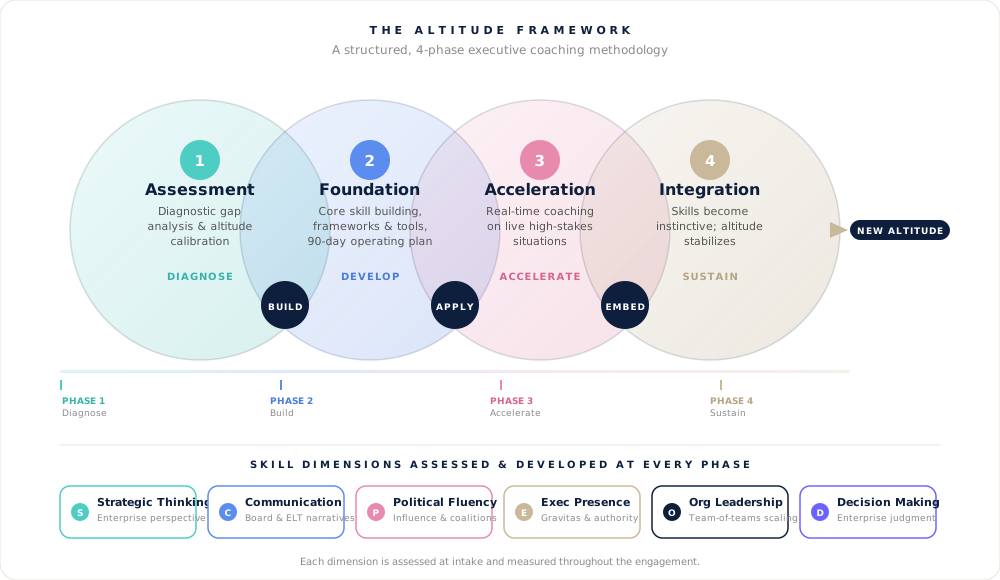
What does coaching look like in practice?
Consider a newly promoted VP who still reviews every decision their directors make. Work keeps returning to the VP, the directors hesitate to act independently, and strategic priorities receive too little attention.
This is a hypothetical illustration of the coaching process, not a client case or promised result.
1. Define the change that matters
Instead of a broad goal such as “delegate more,” the leader identifies a practical target: give directors clear ownership of agreed decisions, with defined limits and escalation points.
2. Understand what gets in the way
The included DISC assessment and 360-degree review inform the discussion. DISC offers a starting point for exploring behavioral preferences; the 360 adds stakeholder perspectives. Neither substitutes for examining actual decisions and working relationships. In this example, an intention to be helpful might be experienced as taking work back.
3. Practice a different behavior
The leader and coach work through an upcoming delegation conversation. The VP clarifies the outcome, decision authority, constraints and check-in points, then asks the director to explain how they will proceed. Between sessions, the VP tries this on a real assignment. The next session examines what happened and what to adjust.
4. Look for observable progress
Possible indicators include fewer unnecessary approval requests, clearer ownership and more decisions made at the agreed level. Stakeholder feedback tests whether others can see the change. These are example measures to adapt, not guaranteed targets or outcomes.
5. Make the change repeatable
The leader applies the approach to additional decisions and documents the habits that help it hold. The aim is a more effective way of leading through other leaders.
What happens before coaching begins?
Start with a free 30-minute Altitude Call by phone to discuss your situation and whether coaching fits. Your proposal follows within two business days and includes a free 90-Day Altitude Game Plan outlining initial priorities and practical next steps. This starting point is refined through the DISC assessment, 360-degree review and deeper conversations once coaching begins.